Staying Whole in a Processed World: Whole Grains
What’s this series all about? Check out the intro post here: Staying Whole in a Processed World: Introduction
Thank you so much for all of your wonderful comments on the fruits & vegetable post! I feel like I’m preaching to the choir, really. If you know anyone else who might benefit from this series, pass it on!
Today I’ll be tackling one of those tricky topics for which it’s often hard to get a straight answer: grains. The government tells us to eat lots of them, the primal/paleos run far away from them, and the traditional foodies only eat them under certain conditions.
So where does that leave the average Wonder-bread-eating person who just wants to make some positive changes?
Obviously making the jump from eating Wonder bread to homemade sourdough (or giving up bread entirely) is a huge lifestyle change, so may I offer a solution?
Using Whole Grains as a Transition
As far as grains are concerned, we as a family hover toward the paleo end of the spectrum, but not too strictly. We try to keep our meals vegetable-centered instead of grain-centered because that makes us feel our best. I’ve used whole grains as a transition step to wean ourselves from refined grains (white flour, white pasta, white rice). I don’t know if we’ll cut grains out entirely, but it seems we’ve found a good balance right now.
So yes… transitioning. For now we’ll just talk about replacing refined grains with whole and leave the whole grains controversy at the door. I think we can all agree that refined grains, or the “whites”, aren’t good for us, right? I included some links in the Resources section if you’d like to learn more about why grains are getting a bad rap.
Where to Start?
The easiest way to start is to gradually (if you do it all at once there might be a mutiny) replacing your white bread, white pasta, white rice, and breakfast cereals with their whole-grain counterparts. Remember to make the changes comfortable and easy. If it stresses you out, it won’t stick.
Pasta and rice…
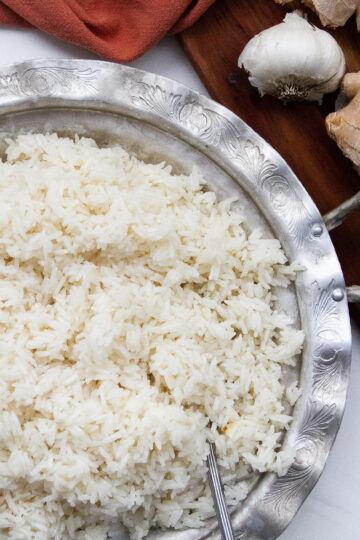
are pretty easy to swap out. Whole wheat, rice, and even quinoa pasta is becoming more common (especially because Celiac disease is becoming the diagnosis of choice these days). Brown and wild rice are great replacements for white. After eating brown rice for so long, I actually prefer its nutty bite to plain white rice.
Bread…
can be tricky if you only eat store-bought bread. It’s hard to find store-bought bread that isn’t made with some sort of refined flour and isn’t full of sugar, preservatives, and other chemicals. Learn to bake your own bread, if you can. If not, buy whole grain bread at a local bakery where it’s less likely to contain preservatives.
If you already make your own bread, gradually add more whole grain flours until your bread is 100% whole grain. (More about baking a bit later.)
Breakfast cereal…
may be a beast to replace, especially if it’s a household staple. Even the most “healthy” looking breakfast cereals are still nothing more than over-processed, cheap grains that are sprayed with synthetic vitamins to give an aura of healthfulness. Try eating more hot cereals like steel-cut oats or making your own granola. The granola route worked with us, but we weren’t big boxed cereal eaters to begin with. Making a big canister of granola every couple of weeks has completely replaced our boxed cereal. I haven’t bought boxed breakfast cereal in almost two years.
If the cereal issue really stresses you (or your family) out, leave it and focus on other things you’re comfortable with changing. You can always go back and try again later.
Other grains
…
There are so many more interesting (and more nutritious) grains than wheat, corn, and rice.
Seriously.
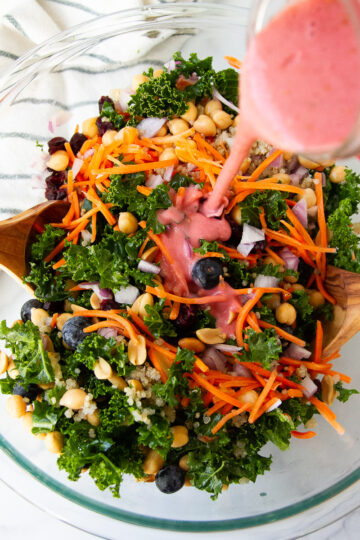
Have you tried quinoa? (Pictured right.) Cook it up with some chicken or vegetable broth, and it’s great as a rice replacement. It also has a higher protein content than any other grain. (Technically it’s a seed, but it cooks and acts like a grain.) Quinoa is becoming mainstream, and can be found more easily in regular grocery stores.
I hear millet, amaranth, and teff are great alternative grains, and they’re far less likely to be genetically modified (like wheat, corn, & soy). When I try them out, I’ll let you know what I think.
Whole Grain Baking
In desserts, I tend to leave most, if not all, of the white flour & white sugar in tact. Why? Because I try only to bake for special occasions. I’d much rather have a real dessert once a month or so than incessant “healthified” mediocre-tasting treats. That’s my compromise to appease my killer sweet tooth. Let’s not talk about what it’s like when I’m pregnant.
So, in this section I’m not talking about desserts. I’m talking about more frequent baking, like yeast breads and things like muffins, pancakes, waffles, etc. — things we tend to bake more often.
After playing with a few (easy to find) types of whole grain flour, this is what I’ve found…
Whole Wheat Flour – I think we’ve all tinkered with this, haven’t we? It’s good in some recipes (see Recipe section below!), but it tends to turn the fluffiest piece of bread into a piece of cardboard and pancakes into hockey pucks. If I use regular whole wheat flour, I’ll usually go halvsies with something lighter.
White Whole Wheat Flour – This is a whole grain flour, lighter in color, and won’t make your baked goods quite as dense. It’s got enough gluten to stand on its own while making bread, too. A lot of people really like this type of flour, but I’m not a big fan. I think it has a weird chemical taste to it. Maybe it’s just me.
Whole Wheat Pastry Flour – One of my favorites to use as a replacement for white flour, it’s great in quick breads that use baking powder or soda as a leavening (muffins, pancakes, waffles, etc.). It has a lower gluten content, so it wouldn’t be wise to make a loaf of bread with this type of flour only. I said before that I don’t replace the flour in desserts…. well… I do use this kind for pie crusts and brownies (and you can barely tell the difference). I find this flour in the bulk section of my grocery store (Winco) as well as bagged in the baking aisle (Bob’s Red Mill brand).
Spelt Flour – Another favorite of mine! Spelt is an ancient form of wheat – what wheat used to be before it was genetically modified to death. It has a much lower gluten content and higher protein content than regular wheat flour and is also lighter in baked goods. There are recipes out there for spelt bread, so I know you can make bread only using this type of flour, and it will hold together. Another reason why I like spelt flour is that it doesn’t make me feel as heavy as whole wheat flour does, and those who have issues with wheat may have an easier time digesting spelt. (It’s NOT gluten-free, though.) I find spelt flour in the bulk section of my grocery store (Winco). They also sell it at Whole Foods, and you can get it online. I’ve yet to see it bagged in the baking aisle though, at least around here.
Buckwheat Flour – Buckwheat flour is a different animal. Technically it’s not wheat or even a grain, but a seed. It’s also gluten-free and won’t weigh your baked goods down. Because it’s gluten-free, you won’t be able to substitute all of your flour for buckwheat (especially in yeast recipes). It has a distinct nutty flavor (which I like). I love using it for crepes and pancakes. (See Recipe section below!)
Making the Transition: A Story About Pancakes
Transitioning to everyday whole grain baking (or baking from scratch) doesn’t have to be painful. One of the first things I did was simply make my own pancake mix.
Once upon a time I was a girl in love with Bisquick and Mrs. Butterworth. Deeply smitten. As I learned more about processed food and started reading ingredient labels, I realized Bisquick wasn’t just flour, salt & leavening, but included a lot of things I didn’t want in my body (like hydrogenated oils — ick.). Enter: Alton Brown.
Make it from scratch
The first pancake mix recipe I tried out was Alton’s. I used all white flour (baby steps!) and was completely fine without my precious Bisquick.
Gradually switch out the “whites”
I started making Alton’s recipe with half white, half wheat and we were still OK. Then I tinkered with buckwheat flour (after finding this recipe) and decided I really liked that. Even more of the white flour was removed.
Make the jump to whole grain
At this point, it had been a few years since I had bought Bisquick, so making the jump to using all whole-grains in my pancake mix was an easy one. A friend gave me a recipe for Whole Grain Oatmeal Pancake Mix, and I gradually replaced all of the wheat flour with spelt, almond meal, and dried coconut. And I still love my pancakes.
What about Mrs. B.? We’ll talk about her in a few weeks.
Your Tastes Will Change!
If you would have told me five years ago that I would prefer brown rice over white, homemade granola over Chocolate Chex, and I’d be eating pancakes from a whole-grain mix, and that I would actually love it, I’d have slapped you silly. The most amazing thing about this transition (as well as other whole-food transitions) is that I don’t feel like I’m depriving myself. I’m still surprised at how my tastes have changed, and how much better real food tastes! (Not to mention how much better it makes me feel!)
Whatever direction (and how far) you want to take this is entirely up to you. With grains, you really need to listen to your body. I would suggest going a week or two without grains, then introducing them one at a time to see if you have any adverse reactions. Reactions may not come until the foods are out of your system and reintroduced. And, of course, talk to your family chiropractor or medical doctor to (hopefully) get some good advice if you do have an allergy.
If you’re interested in transitioning out of grains entirely, I’d be more than happy to write a post about our experiences. We’re not all the way there yet, but we’ve removed quite a bit of it (especially wheat) out of our diet. Let me know if that’s something you’d like to read!
Assignment!
OK, now that you’re prepped and motivated here’s your assignment for this week…
1. Replace something that you usually eat with its whole grain counterpart. Try brown rice this week. Or buying whole wheat bread.
OR
2. Try out a new grain! Quinoa’s a great one to start with if you’ve never tried it, but it does need a lot of flavor. Cook it with broth or try out one of the recipes in the Resources section!
Resources
My Favorite Whole Grain Recipes
Breakfast
Basic Pancake Mix
Buckwheat Pancake Mix
Whole Grain Oatmeal Pancake Mix (I’ve since swapped out all of the wheat flour for 4 cups spelt, 2 cups almond flour, and 2 cups dried unsweetened coconut)
Buckwheat Crepes
Carrot Cake Breakfast Cookies
Cranberry Oatmeal Scones
Gluten-Free Apple Ginger Spice Scones
Steel-Cut Oats Tutorial (with lots of flavor ideas)
Basic Homemade Granola
Almond Joy Granola (from Cara’s Cravings)
Whole Grain Waffles (I use half spelt, half whole wheat pastry flour)
Spiced Pear Breakfast Crumble
Breads & Pizza
Classic 100% Whole Wheat Bread
Whole Wheat Bread III (recommended by a friend, from Allrecipes.com)
Whole Grain Crusty Bread
My Go-To Whole Wheat Pizza Crust
Gluten-Free Cauliflower Pizza Crust (if you’re looking to remove grains completely!)
Quinoa
Quinoa & Chicken Greek Salad (from Cooking Healthy for Me)
Mango-Cucumber Rice Salad
Lemon Quinoa Salad with Greens
Quinoa with Garlic, Nuts, & Raisins
Quinoa with Black Beans & Cilantro
Spiced Quinoa with Cherries (more of a breakfast dish)
Links
Replacing White Flour with Whole Grains in Four Simple Steps – Weston A. Price Foundation Website
The How-To of Using Alternative Grains – Keeper of the Home
If you’re interested in why the paleo/primals run from grains (and why we’re transitioning away from them), here are few places to start…
Eating This Can “Tear Holes” in Your Gut – Mercola.com
Reduce Grains and Sugar to Lose Weight and Improve Health – Mercola.com
Why Grains are Unhealthy – Mark’s Daily Apple
The Dark Side of Wheat: New Perspectives on Celiac Disease and Wheat Intolerance by Sayer Ji (more scientific)
Are you enjoying the series so far? If so, spread the word!
Subscribe to Perry’s Plate via RSS Feed or follow on Facebook, Twitter, or Pinterest so you don’t miss a single post. You can also receive updates to your inbox by putting your email address in that pink box in the sidebar.
Other posts in this series: (links will be added as posts are published)
Introduction
Fruits & Vegetables
Getting Your Protein
Healthy Fats
Processed Food
Sweets
Photo Credits: Shutterstock, Perry’s Plate (bread & pancakes)


perrysplate
7
1


cassie — April 16, 2012 @ 9:00 am
Love these posts, Natalie! I need to read and re-read to soak it all in!
[Reply]
Natalie replied: — April 16th, 2012 @ 7:20 pm
Thanks so much Cassie! They’re more time consuming than I thought they’d be so it’s nice to hear that a few people are actually reading the whole thing. :)
Pingback: Perry's Plate » Staying Whole in a Processed World: Whole Grains – Fine Food Recipes
Heather — April 16, 2012 @ 10:06 am
You are not just preaching to the choir. Some of us really need help!
[Reply]
Natalie replied: — April 16th, 2012 @ 7:19 pm
Phew! I hope I can help then! :)
Kristin — April 16, 2012 @ 11:08 am
Thanks so much for these posts! I have been moving in this direction (very slowly) for a few years now. After having baby #1 3 years ago, I committed to making all of her baby food. Then I asked myself, if I am so concerned about what goes in her body, shouldn’t I be that concerned about what goes into ours? A very busy lifestyle and a somewhat reluctant hubby have meant a a slow transition. However, we are in week 2 of a 30 day paleo challenge and hubby is finally on board for some major changes to how we live. I would love to hear more about your family’s experiences with transitioning out of grains. These posts are not only extremely useful but very timely for us!
[Reply]
Natalie replied: — April 16th, 2012 @ 7:13 pm
Good to hear!! Our transition was slow, too, and I was the reluctant spouse (I think I’m the minority… I hear a lot about reluctant husbands, but not wives. haha) Good luck with that paleo challenge! I’ll see if I can get a post together :)
Samantha — April 16, 2012 @ 11:36 am
I was just going to suggest Ezekial Bread for those who buy bread but I see one of the links you provided does that for me! It is found in the freezer section and it a good store bought bread option! These are awesome posts. I can’t wait for the rest.
[Reply]
Natalie replied: — April 16th, 2012 @ 7:14 pm
Yes! Ezekial bread is hard to find sometimes. I’m glad I live somewhere where I can find it! Thanks so much – glad you’re enjoying them!
Jenni — April 16, 2012 @ 12:08 pm
I grew up eating home ground whole wheat flour in desserts. Fruit Crisps, especially, are wonderful with whole wheat flour. Ours was coarse ground and added a wonderful texture to the crisp topping.
[Reply]
Natalie replied: — April 16th, 2012 @ 7:15 pm
You were lucky to be exposed to that early on! I can imagine a crisp or a crumble would be great with coarse wheat in the topping. :)
gwen — April 16, 2012 @ 2:22 pm
I love this series! Thanks for doing it. I try to be like Natalie — seriously, that’s my benchmark! — when I’m cooking for myself. :) (Unfortunately I haven’t really shaken any of my bad habits when I’m eating out. Baby steps!) And I just can’t get into whole-wheat pasta, which I’ve been eating at my parents’ house for at least six or seven years. Does anyone else think it tastes gummy and pungent? I’ve basically just stopped eating pasta instead, haha.
[Reply]
Natalie replied: — April 16th, 2012 @ 7:17 pm
Ah, Gwen. You always make me blush. (I’m not as great when I eat out, too… so we really are a lot alike.) I’ve heard a lot of people say they don’t like whole wheat pasta. We don’t mind it. (I kind of like the toothy texture, to be honest.) If we do eat pasta I get brown rice pasta. (That has a tendency to be gummy, too, if overcooked.) Or I make my own. I think we’d only have pasta twice a year if I made my own. Maybe that isn’t such a bad thing :)
Joanne — April 16, 2012 @ 6:09 pm
I’ve gotten to the point in my life where white bread tastes so weird and not good to me. I’d much rather have hearty whole grain (and always homemade…I haven’t bought bread from a store in about…three years). Whole grains are the best!
[Reply]
Natalie replied: — April 16th, 2012 @ 7:19 pm
I know, right? I’m the same way. Unless it’s a really great artisan crusty sourdough, then I’ll eat the whole loaf. Regular white bread tastes SO sweet and full of chemicals… it’s crazy.
Kristen — April 16, 2012 @ 7:37 pm
Thanks so much for the series, Natalie. We’ve always eaten healthy, but really trying to make a switch to more whole foods the last year. I’ve struggled with all the research of a paleo vs. vegetarian diet. I’ve found myself somewhere in the middle, when we eat meat it’s grass-fed, but I feel in love with some vegan recipes recently. In the end I try to keep our staple as fruits and veges. I do think we eat too many grains, but I really don’t know how to reduce them. I’d love to see a post on your family’s progress and why you’ve chosen a more paleo diet.
[Reply]
Natalie replied: — April 16th, 2012 @ 9:48 pm
You’re so welcome! It sounds like we’re in a similar boat. I don’t like the idea of eating tons of meat nor the idea of eating tons of grains. I’ve had a hard time balancing it as well! (Snaps for choosing grass-fed beef :)… you’ll like next week’s post!)
Katie {Epicurean Mom} — April 16, 2012 @ 7:49 pm
Love this post Natalie!! So informative! I incorporate whole grains into our family’s foods, usually ;-)
[Reply]
Kristin — April 16, 2012 @ 8:03 pm
Thank you again for this series! You’ve definitely peaked my interest–We do pretty well using whole grains around here and I grew up thinking whole grains were healthy…but this paleo thing sounds interesting. I’d love to hear more! I’m excited to browse some of the resources and recipes you’ve listed.
[Reply]
Natalie replied: — April 16th, 2012 @ 9:54 pm
Thanks Kristin! The paleo ideas and lifestyle are so interesting and make so much sense to me! There are a lot of good general health-related articles on Mercola.com (although sometimes I think he’s a little extreme). Mark’s Daily Apple is a good one for paleo-specific articles.
Kathryn — April 16, 2012 @ 10:08 pm
Awwww, you posted my link! I feel special :) This is a great post, Natalie. I thought I knew a lot about whole grains, but apparently there is more to explore! I’m intrigued by spelt and buckwheat… I’m totally going to try those whole wheat pancakes with your spelt/almond flour substitutions. Eating whole grains is seriously so much better-tasting than the refined stuff! I don’t think I could eat Wonder Bread again.
[Reply]
Dana — April 17, 2012 @ 5:45 pm
Thank you so much for doing this series. I’m reading In Defense of Food right now and am anxiously learning how to have a more “whole foods” kitchen. Your posts are very clear and good for someone still learning the ropes. About a year ago I started doing a lot more cooking/baking to replace the processed foods in our pantry but I admit I have a long way to go because I still use white flour more often than I probably should. I just keep reminding myself that this is a process and there is no way I can make all of these changes at once. I am excited to report that I made the granola today (I’ve made granola a lot before but not with coconut oil) because I’ve been reading a lot about coconut oil and wanted to give it a try. It turned out great! Thank you again for the time you are taking to do this. It IS helping!
[Reply]
Leslie — April 17, 2012 @ 5:54 pm
Thanks, again, for the next edition of information. You are the best. I wrote a week ago to say that I had jumped in with both feet — cleaning out my pantry and absolutely giving up processed foods. Wow! I feel so much better — really! And I lost 3 lbs without thinking about calories and such. I’m sticking to the no preservatives or processed food for 21 days, then I’m adding No Sugar. This is the beginning of a wonderful healthy season. Thank you for the inspiration!
[Reply]
Tina — April 18, 2012 @ 5:35 am
Thanks Natalie! This is very interesting. I was not aware of the paleo argument around grains. We don’t have much of a problem with processed food but I love bread. I make homemade bread with whole wheat flour that has sunflower seeds, flax, quinoa, millet, amarath and such. It’s good and very filling. I will have to think more about the grain thing though. I would love to hear more about your family’s journey. I am also curious to read the upcoming post on milk and dairy. Ever since I read The China Study a few years ago I have been wondering about healthy dairy really is and if items like rice milk are better.
[Reply]
Rachel Cooks (formerly Not Rachael Ray) — April 18, 2012 @ 6:34 am
This is a great series, Natalie! We love whole grains :)
[Reply]
Sarah — April 19, 2012 @ 11:03 pm
I really have enjoyed your series. I do TONS of cooking (usually 3 meals/day) and we are trying to do veggies with every meal. It has been really good for us. We always ate them with dinner before, but now I’m getting better at focusing on fruits and vegetables, rather than starches. I kinda love the idea of going totally paleo, but I’m not sure if my family would go along with it… Baby steps!
[Reply]
Rachel — May 2, 2012 @ 8:01 pm
Andrew over at Eating Rules has an AMAZING 100% whole wheat bread, borrowed from Carrie Vitt. It can be made in under 2 hours, including rising time. It changed my life. http://www.eatingrules.com/2010/10/100-percent-whole-wheat-bread/
[Reply]
Sile — September 7, 2012 @ 7:49 am
I find your blog at a time when I’m wanting to transition my family away from processed food and then I come across these posts. I have so much love for all the work you’ve put into these! All of the things you have posted will be very helpful to me as I transition us into healthier eating.
We don’t have kids yet (but are trying!) and while my husband is the one who consumes most of the processed stuff in the house, if it’s there sometimes I eat it too, and then regret it.
I made the switch from soda (and sugar laden pre-made tea ala Arizona) during our honeymoon, and now when I occasionally drink soda, I notice an unpleasant film coating my mouth afterward. My husband, however, doesn’t like the way the water tastes in our current residence, but we’re moving in the next few weeks and getting a brand new fridge with water and ice through the door! So I’m hoping this will entice him to drink more water. He also drinks way too much milk for my liking. We go through 4-6 gallons a month. I use some for cooking/baking, but mostly it’s him on his horrid cereal and drinking glasses of it instead of water. I think weaning him from his cereals and processed snacks will be hard, but I’m hoping that by offering REAL FOOD alternatives to these will help. Like making fruit leather from pureed real fruit instead of his hfcs fruit snacks.
Don’t mean to leave a novel on your comments section, just want you to know how much I personally appreciate all the time and effort you’ve put into all of these “staying whole” posts. (and I would really like to see a post on cost difference, if you get the chance.. it would help me convince the husband why eating better doesn’t HAVE to be expensive.)
[Reply]
Natalie replied: — September 11th, 2012 @ 9:29 am
Hi Sile,
I’m so sorry it’s taken me so long to respond. Thank you so much for your comment and for sharing your experiences with me! It means so much that you gleaned some information from my Staying Whole Series. (Ya… that was more time consuming than I anticipated!) I may do a post that will touch on the cost of a whole food diet, but I need to be getting at least 7-8 hours of sleep a night to tackle that one. Haha. Don’t give up on your husband! Any small change is a success. Best of luck to you guys!!
Pingback: Perry's Plate » Gluten-Free Pumpkin Chocolate Chip Pancakes