Easy Whole Grain, Shortening-Free Pie Crust, Version One

Did you know that February is National Pie Month? According to people who seem to be able to predict food trends, pies are supposed to de-throne cupcakes this year. Wouldn’t that be a good fight to watch? Any thoughts on that?

Pie crust, it seems, is a very personal thing. I’ve heard people swear by their grandmother’s recipe and won’t try anything else. Pie crust recipes can be finicky, temperamental, and cause emotional breakdowns. Pie crust also has the reputation for being extremely unhealthy. Today I hope to ease some fears and tension surrounding pie crust, but if you still need a shoulder to cry one, I’m here.

My two biggest beefs with pie crust are…

1) The shortening. I hate shortening, and this probably stems from two places. First, I avoid all types of hydrogenated oils and fats in our diet.  

**They make “trans-fat free” shortening now, which I SO do not understand. Making liquid vegetable oil (which isn’t good for you in the first place) into a solid results in trans-fats. Whatever chemical alterations they made to get around that probably isn’t good for us anyway. Or they manipulated the labeling standards. (If a food has less than .5 gram of something per serving, they can claim 0 on the nutrition label. That’s why non-stick sprays, which contain only oil are “miraculously” fat-free. Lower the serving size enough, and . . .it’s fat-free! )

The other reason why I have an aversion to shortening is because I took a Wilton cake decorating class while I was pregnant with my second child. The smell alone of shortening-laden frosting makes the hair on the back of my neck stick up. Since then I said good-bye to shortening and haven’t bought any since.

2) The white flour. Enriched white flour is basically garbage, but it sure makes things taste good, doesn’t it? I don’t usually replace the white flour in dessert recipes because desserts are meant to be special, extremely tasty, and (for us at least) not an everyday thing. Because pie crusts can be used both for desserts and savory dishes, I thought I’d give it a shot and see if any flavor was sacrificed.

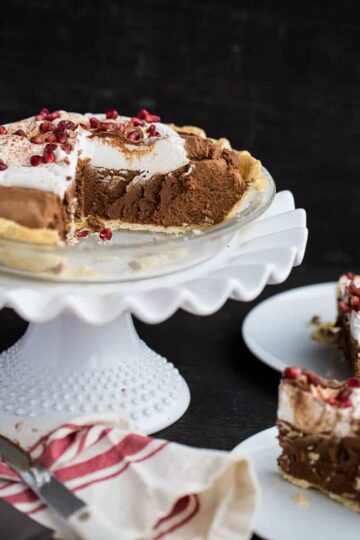
Grandma Inez's Pineapple Pie

My grandma has the best pie crust recipe I’ve ever tried, so I took hers as a jump-off point to reconcile our relationship. (Between the crust and me, not my grandma and me. Actually, if she knew I changed her recipe, she’d give me that look….and probably get all huffy. I love you, Grandma. I do.)

I swapped out the shortening for a lesser amount of butter (a natural source of fat and not as bad for you as you probably think) and started replacing, a little at a time, the white flour for whole wheat pastry flour. Shortening affects the pie crust’s texture, but I think that using all butter only alters it slightly. And it’s a trade-off I’m willing to make. Using whole wheat pastry flour didn’t make it taste like cardboard, either (why I love the stuff).  My last test run was 3/4 whole wheat and 1/4 white flour. I believe you can go all the way with this, though. The end result was flaky and tasted great.

So now my ranting and explaining is over, let’s get to work. I added the full ingredients list and instructions at the bottom of the post, but wanted to give you more detailed photos. By the way, this recipe makes two crusts (enough for one double-crusted pie or two single-crusted pies).

01 - January4-1

1. No, that is not cheese. It’s butter, actually. Frozen butter. I learned a trick from Joy the Baker which eliminates the need to cut the butter/shortening into the flour. Just grate frozen butter onto a plate and stick it in the freezer until you’re ready to use it. (**Avoid using a box grater as the butter will stick to the inside!**) You’ll also need to fill a cup with water and put a few ice cubes in it. It needs to get nice and cold.

2. Whisk together the flour and salt in a medium-sized bowl.

3. Take the ice water and measure out 1/4 cup water.

4. Crack the egg into the measured ice water and beat with a fork.

01 - January5

5. Grab the grated butter from the freezer and dump it into the dry ingredients.

6. Using your fingers, break up the butter if it clumps together to thoroughly combine everything.

7. Pour in the egg-water mixture and stir with a hefty spoon. Add a tablespoon or two of water if it seems dry.

8. Gather all the dough into one lump. Divide it in half. If you’re not using both crusts, wrap one half in plastic wrap, place it in a freezer bag and freeze it. Or put it in the fridge if you plan on using it within a couple of days.

01 - January6

9. Using a wet washrag or your wet hands, moisten the counter top and place a piece of wax paper over top. It shouldn’t slide anywhere. (And it makes clean-up a breeze!) Sprinkle flour over the wax paper and place your dough ball in the center, flattening it like a disk. Start rolling it out, working from the center to the outsides.

10. Turn your pie plate upside down on the dough and cut dough with a sharp knife about an inch larger than the pie plate.

11. Remove the dough from the wax paper by rolling the dough up onto the rolling pin (thanks Alton Brown!) while peeling away the paper underneath.

12. Gently lift the dough up and over to the pie plate, centering it as you unroll it from the rolling pin.

01 - January7

13. Press the dough into the pie plate, but don’t stretch it. (I’ll shrink when it bakes.) Fold the ragged edges of the pie crust under itself.

14. If you want, you can flute the edges. Since I haven’t mastered the art of pressing my camera’s shutter button via telepathy, I had to show you with one hand. It’s easy to do, really. Just use the thumb and forefinger of one hand and the knuckle of the forefinger of your other hand to form the dough. (Does that make sense?)

15. If you’re making an apple pie or something where the crust isn’t pre-baked, it’s ready to use.

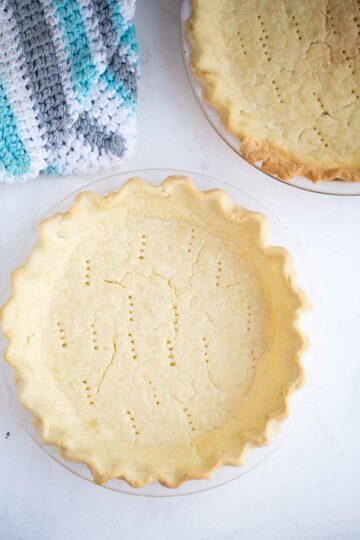
If you’re baking the crust by itself, preheat the oven to 375 degrees F and poke a lot of holes in the bottom of the crust with a fork to keep it from bubbling up. You can also use pie weights, but fork holes work just as well. (In my not-so-professional pie-making opinion….) Bake for 10-12 minutes or until the edges just barely start to turn brown. (Don’t let the raw dough sit out for too long before you bake it. Stick it in the fridge if you need to wait for the oven to heat up.)

11.01.25-326

And. . . voila. A pie crust. Not the prettiest pie crust on the blog. Luckily rustic and misshapen things are all the rage right now. It’s ready to be filled with. . .

Grandma Inez's Pineapple Pie

Cool, creamy pineapple filling. Did you catch the updated Pineapple Pie post? It didn’t show up on feed readers last Saturday, and I don’t know if I did a good job getting the word out.

Next time I’ll have an even easier pie crust for you. Also whole-grain and shortening-free. AND you don’t have to roll it out. (Are you excited? You should be.)

PrintSave

Easy Whole Grain, Shortening-Free Pie Crust

Yield: Makes 2 single crusts

Ingredients:

1/4 cup ice water
1 egg
2 cups whole wheat pastry flour
1/2 tsp salt
12 T butter (1 1/2 sticks), frozen

Directions:

Fill a drinking glass with water and stick a few ice cubes in it while you grate the frozen butter. (Avoid using a box grater as the butter will stick to the inside.) Place butter in the freezer until you're ready to use it.

Whisk together the flour and salt in a medium-sized bowl. Take the ice water and measure out 1/4 cup into a 1-cup measuring cup. Crack the egg into the measured ice water and beat with a fork.

Grab the grated butter from the freezer and dump it into the dry ingredients. Using your fingers, break up the butter if it clumps together to thoroughly combine everything. Pour in the egg-water mixture and stir with a hefty spoon. Add a tablespoon or two of water if it seems dry.

Gather all the dough into one lump. Divide it in half. If you're not using both crusts, wrap one half in plastic wrap, place it in a freezer bag and freeze it. Or put it in the fridge if you plan on using it within a couple of days.

Using a wet washrag or your wet hands, moisten the countertop and place a piece of wax paper over top. It shouldn't slide anywhere. Sprinkle flour over the wax paper and place your dough ball in the center, flattening it like a disk. Start rolling it out, working from the center to the outsides. Turn your pie plate upside down on the dough and cut dough with a sharp knife about an inch larger than the pie plate.

Remove the dough from the wax paper by rolling the dough up onto the rolling pin while peeling away the paper underneath. Gently lift the dough up and over to the pie plate, centering it as you unroll it from the rolling pin.

Press the dough into the pie plate, but don't stretch it. (I'll shrink when it bakes.) Fold the ragged edges of the pie crust under the side of the plate. If you want, you can flute the edges. If you're making an apple pie or something where the crust isn't pre-baked, it's ready to use.

If you're baking the crust by itself, preheat the oven to 375 degrees F and poke a lot of holes in the bottom of the crust with a fork to keep it from bubbling up. Bake for 10-12 minutes or until the edges just barely start to turn brown. (Don't let the raw dough sit out for too long before you bake it. Stick it in the fridge if you need to wait for the oven to heat up.)

Nat's Notes:
1. Wow, this ended up being a longer recipe than I though. It really is easy, though, and only takes about 15 minutes to do. (Not including baking.)
2. You can find whole wheat pastry flour in the bulk section or in the baking section of well-stocked grocery stores. Or online. You can buy anything online.

adapted from my grandma (Inez Henderson)

  Pin It

23 Responses to “Easy Whole Grain, Shortening-Free Pie Crust, Version One”

  1. 1

    Alex Evelyn — February 1, 2011 @ 12:26 pm

    hi Natalie, I love the grated butter idea. Do you have Spelt flour in the US, I quite often use that in my pastry and cakes, it is an ancient form of wheat, with much less gluten in it, which is much easier to digest than white flour. I quite often make a family loaf of bread using spelt flour as you don't need to leave it to rise like normal bread flour, which fits in with my hectic life with little children! Love the blog .

    [Reply]

  2. 2

    Kathryn — February 1, 2011 @ 4:22 pm

    hooray for pie!!! I love all pies.

    I wish I had this recipe two days ago when I made chicken pot pie. Next time!

    [Reply]

  3. 3

    Kate — February 1, 2011 @ 5:37 pm

    Thank you, thank you! I was so appalled at the ingredients in pre-made pie crusts this fall that I gave up on making pies altogether. Hydrogenated oils, corn syrup, and lard? Blech! I recently bought a rolling pin, so I'll start making my own crust using your recipe! Bring on the pies!

    [Reply]

  4. 4

    rachel tsunami — February 1, 2011 @ 5:47 pm

    Natalie,
    Tracked you here from TK. I have had pineapple pie before and it is delicious! Thanks for the reminder. I will definitely be making your grandma's recipe.
    I lovelovelove finding your recipe for whole wheat pie crust. We grind our own wheat and make a variety of breads. Can you tell me how to get whole wheat pastry flour? Would that just be the very finest setting on my GrainMaster?
    I may even try the spelt flour for bread that Alex suggested.
    Beautiful blog. I'm following.

    [Reply]

  5. 5

    rachel tsunami — February 1, 2011 @ 5:50 pm

    Just saw your note about finding ww pastry flour in stores, but I don't think I'll find that in our small town.

    [Reply]

  6. 6

    Joanne — February 1, 2011 @ 5:55 pm

    I totally understand the appeal of pie…but for me cupcakes will always be my go-to. They are so easy and portable and adaptable! Especially when you're serving a whole bunch of med students. Pie just doesn't travel as well.

    That being said, i do ADORE a good pie. But I hate shortening. Hate. It makes me feel ill in so many ways. This crust. Amazing.

    [Reply]

  7. 7

    Natalie @ Perrys' Plate — February 1, 2011 @ 5:57 pm

    Rachel – I've never ground my own wheat before, but I know that whole wheat pastry flour is a different type of wheat than the kind used to make typical whole wheat flour. (Which is why it works so well as a substitute for white flour.) I think spelt would be a great alternative, like Alex said. Or you could buy a bag online (I believe I linked to the Amazon page in the post.)

    Good luck! And thank you for your wonderful compliments!

    [Reply]

  8. 8

    danasfoodforthought — February 1, 2011 @ 7:43 pm

    This is great… I love the step by step pictures for pie novices like myself!

    [Reply]

  9. 9

    Lauren's Latest — February 1, 2011 @ 10:17 pm

    Awesome! I'm totally going to try this! I don't like shortening either.

    [Reply]

  10. 10

    Jolene - EverydayFoodie — February 2, 2011 @ 5:24 am

    Thanks for the step-by-step instructions. Pie crusts are one thing I have always been very intimidated to make.

    [Reply]

  11. 11

    Dea-chan — February 2, 2011 @ 5:41 pm

    Hey, I just wanted to let you know that I tried your galette and it was AMAZING. Instead of dijon mustard I used this awesome Horseradish Hemp stuff I have from a company called "Hempzels" — the best mustard I've ever had.

    Also, the grated butter trick was really awesome, but you should give a warning to not use a box grater, as I had a TON of butter stuck to the inside! That, and holy cow does butter make a difference to pie crust.

    All in all, your site made dinner last night, and both I and my fiance loved it! :-D

    [Reply]

  12. 12

    Dea-chan — February 2, 2011 @ 5:42 pm

    Oh, and regular whole wheat flour is hard red wheat, whereas whole wheat pastry flour is soft white I believe — so it's the difference in what variety of wheat.

    [Reply]

  13. 13

    Natalie @ Perrys' Plate — February 2, 2011 @ 7:05 pm

    Dea-chan – Thank you! I'm glad you mentioned the stickiness of the butter. I don't have a box grater (only a flat one), so it didn't even occur to me. And thanks for the clarification about the wheat as well. I'm glad you liked the galette!

    And welcome to the land of buttered pie crusts… it's nice to have you :)

    [Reply]

  14. 14

    rachel tsunami — February 2, 2011 @ 9:10 pm

    Dea-chan: Well, yay! We use soft white wheat often for bread too, so I will just grind it on the finest setting.

    Also, your mustard praise is enticing. I will look for Hempzels.

    I only have a box grater, but I use a rubber spatula when stuff is stuck in there. Natalie, grating the frozen butter is the most fabulous thing I've read in a while. I Do Not enjoy having to cut butter or shortening into anything. Ranks next to cleaning the muffin tin.

    [Reply]

  15. 15

    Natalie @ Perrys' Plate — February 2, 2011 @ 9:16 pm

    Rachel – AMEN. I HATE, HATE, HATE!!! cleaning the muffin tin. The dishwasher never seems to do a decent job! That ranks pretty close to cleaning out hair clogs in drains for me.

    [Reply]

  16. 16

    Kathryn — February 3, 2011 @ 6:02 am

    After reading what you said about hydrogenated oils, I'm wondering if lard would be a good substitute for Crisco. I know lard is pretty much disgusting if you think about it, but at least it's not chemically altered… right?? And it's cheaper than butter. But, I really don't know much about this stuff.

    [Reply]

  17. 17

    Natalie @ Perrys' Plate — February 3, 2011 @ 7:08 am

    Kathryn – From what I've read, lard IS a better alternative to Crisco, but the kind you buy at the store (Manteca, I think) is still pretty processed (thus the pure white color). There are ways of getting less-processed lard (like through farmers or maybe butchers), but I don't remember how.

    [Reply]

  18. 18

    Janssen — June 8, 2011 @ 7:11 pm

    I used a box grater (no other options except a microplane and. . .that seemed foolish) and I had minimal butter stuck inside. A quick swipe with the knife I'd used to level my flour and I lost very little to the box grater. Just wanted to throw that out there :)

    [Reply]

  19. 19

    Ruth — June 21, 2012 @ 8:19 pm

    This is the best whole wheat crust. Our family has been moving to whole grains and more vegetables. Today was my husband’s birthday and he requested apple pie. I have an awesome crisco/white flour recipe but I didn’t want to go back to that way of baking, so I googled for whole wheat crust and found your wonderful website. My entire family said this crust is the bomb! Thanks for sharing it!

    [Reply]

    • Natalie replied: — June 21st, 2012 @ 8:43 pm

      So glad you all liked it! I also love that you made a birthday pie. :)

  20. 20

    Raylene — November 9, 2012 @ 9:51 am

    The butter idea is brilliant! I just get behind cutting the butter. I wonder if you could grate with a food processor, might have to give it a try. Work great on cheese. Will give this recipe a try, have tried pie crust but am also intimidated. Also love the idea of no white, flour. Will post how it after I try it. My first try will be a pot pie. My daughter loves them and trying to make somewhat healthier.

    [Reply]

  21. 21

    Stephanie — April 8, 2013 @ 2:37 pm

    How much shortening does the original recipe ask for? Just curious as to the butter to shortening ratio that you used.

    [Reply]

    • Natalie Perry replied: — April 8th, 2013 @ 3:12 pm

      Hi Stephanie! The original recipe called for the same amount of shortening plus 2 Tablespoons of butter. So, I just omitted the extra 2 Tablespoons. There was nothing scientific about it. I just noticed it was particularly greasy when I used the full amount in butter.

Leave a Comment